Jagdish Swaminathan, a towering figure of Indian modern art, combined political and philosophical enquiries, deeply rooted in Indian realities, into his art. His significance lies in the way he rejected conventional artistic hierarchies, merging
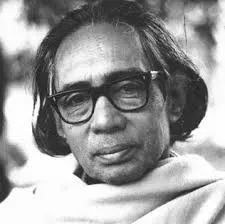
Jagdish Swaminathan, a towering figure of Indian modern art, combined political and philosophical enquiries, deeply rooted in Indian realities, into his art. His significance lies in the way he rejected conventional artistic hierarchies, merging indigenous tribal motifs with the formal language of modernist abstraction.
Born in 1928 in Shimla, Swaminathan’s path to art was shaped by his political activism. An early association with the Communist Party of India, influenced his belief that art could be a form of resistance. He studied art at Delhi Polytechnic and later the Academy of Fine Arts in Warsaw, Poland.
Swaminathan is best known for founding Group 1890, an avant-garde collective that sought to move beyond the two dominant streams of Indian art at the time: the romanticized nationalism of the Bengal School and the Western-oriented approaches of the Progressive Artists’ Group. He espoused art that was uniquely Indian.
Swaminathan’s Bird, Tree, Mountain series is perhaps his most iconic body of work, one that encapsulates his synthesis of abstraction and symbolism. The paintings are composed of flat planes of color, emphasizing simplicity of form—a conscious departure from Western conventions of depth, perspective, and realism. Yet, within this simplicity lies a deep engagement with Indian folk and tribal art, creating compositions that evoke a primal connection to nature and spirituality.
Swaminathan is deeply appreciated for his efforts to elevate the status of Indian tribal and folk art. In 1982, he founded the Bharat Bhavan in Bhopal, a multi-arts complex that became a central platform for both contemporary and traditional Indian art. He served as the director of its Roopankar Art Museum till 1990. Swaminathan supported Gond artists like artist Jangarh Singh Shyam and brought them to the mainstream. Swaminathan did not view tribal art practices as exotic curiosities to be mined for inspiration, but as integral to India’s contemporary artistic landscape.
The artist died in 1994.
Academics
His education in art consisted of short spells at the Delhi Polytechnic and later, in Poland.
Jagdish Swaminathan, a towering figure of Indian modern art, combined political and philosophical enquiries, deeply rooted in Indian realities, into his art. His significance lies in the way he rejected conventional artistic hierarchies, merging indigenous tribal motifs with the formal language of
Jagdish Swaminathan, a towering figure of Indian modern art, combined political and philosophical enquiries, deeply rooted in Indian realities, into his art. His significance lies in the way he rejected conventional artistic hierarchies, merging indigenous tribal motifs with the formal language of modernist abstraction.
Born in 1928 in Shimla, Swaminathan’s path to art was shaped by his political activism. An early association with the Communist Party of India, influenced his belief that art could be a form of resistance. He studied art at Delhi Polytechnic and later the Academy of Fine Arts in Warsaw, Poland.
Swaminathan is best known for founding Group 1890, an avant-garde collective that sought to move beyond the two dominant streams of Indian art at the time: the romanticized nationalism of the Bengal School and the Western-oriented approaches of the Progressive Artists’ Group. He espoused art that was uniquely Indian.
Swaminathan’s Bird, Tree, Mountain series is perhaps his most iconic body of work, one that encapsulates his synthesis of abstraction and symbolism. The paintings are composed of flat planes of color, emphasizing simplicity of form—a conscious departure from Western conventions of depth, perspective, and realism. Yet, within this simplicity lies a deep engagement with Indian folk and tribal art, creating compositions that evoke a primal connection to nature and spirituality.
Swaminathan is deeply appreciated for his efforts to elevate the status of Indian tribal and folk art. In 1982, he founded the Bharat Bhavan in Bhopal, a multi-arts complex that became a central platform for both contemporary and traditional Indian art. He served as the director of its Roopankar Art Museum till 1990. Swaminathan supported Gond artists like artist Jangarh Singh Shyam and brought them to the mainstream. Swaminathan did not view tribal art practices as exotic curiosities to be mined for inspiration, but as integral to India’s contemporary artistic landscape.
The artist died in 1994.
Academics
His education in art consisted of short spells at the Delhi Polytechnic and later, in Poland.